

Movement Leading
Movements are not built by qualified professionals; they are carried by willing ordinary people who pass the work to the next generation.
Understand
From Leader to Leading
Most churches are organized around a noun: leader. The moment you use that word, you activate a mental picture that most people immediately exclude themselves from, the extrovert, the platform personality, the seminary graduate, the person with the title and the charisma. That picture is not neutral. It is structural. It determines who gets developed and who gets overlooked. And it is why movements stall.
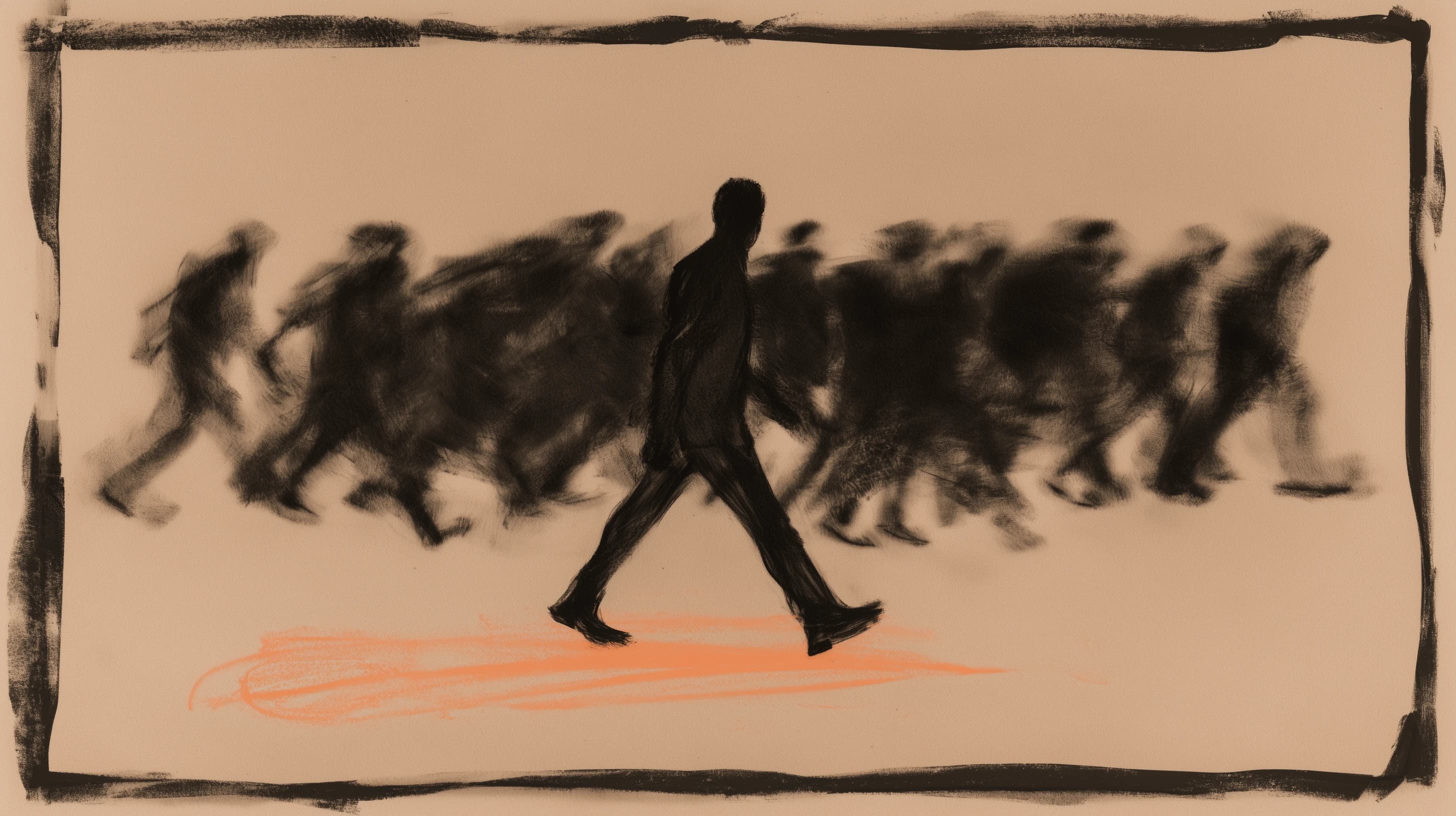
Movement Leading starts by changing the question. Not who are the leaders, but who is leading. Those are not the same question. The first produces a caste. The second produces a movement. Leading is a verb. It describes an activity. Activities are available to people who hold no position. When you ask who is leading, a woman with no formal education, no seminary training, no credentials of any kind that Western Christianity would recognize as qualifying her for ministry turns out to be doing the most important leading in the room.
The shift runs deeper than vocabulary. The metaphors we have inherited for leadership in American Christianity are drawn from corporate management, celebrity culture, and traditional pastoral authority. Those metaphors produce caste systems, not movements. They identify the verbally gifted and overlook the ordinary. Until we give up our misplaced trust in subject-matter experts and understand that Jesus doesn't need the equipped but the willing, we will never mine the wealth of Christ followers and discover the viral power of the good news.
Movement Leading is the practice of releasing willing people into simple, repeatable habits, and then measuring everything against a single question: can our disciples make disciples who make disciples? If the movement stops when you stop, you have built an audience. The work has to travel beyond the reach of the people who started it. That only happens when ordinary people can do what you do and pass it on before the week is out.
Who in my circle is already willing to obey Jesus, and what simple, repeatable habit can I hand them today so they can pass it to someone else this week?
How do we develop stronger leaders for our church?
Until we give up our misplaced trust in subject-matter experts and understand that Jesus doesn't need the equipped but the willing, we will never mine the wealth of Christ followers and discover the viral power of the good news.
Willing, Leading, Multiply
The framework moves in three steps that build on each other. None of them require a title, a platform, or a seminary degree. They require a willing person, a simple habit, and the discipline to measure success by what happens in the third and fourth generation, not by the size of the crowd around you.
- 01
release the willing
As soon as someone begins to express obedience to Jesus, you have engaged a potential disciple-making disciple. All they need is a simple repeatable process to help others do the same thing they are doing so movements can begin. The trained, the credentialed, and the ordained are not the bottleneck Jesus designed. He started a Disciple-Making Movement with a team not even fully on board with who He was or what He was up to. He started anyway. Your job is to do the same.
- 02
develop leading
The word leading is a verb. It describes an activity. Activities are available to people who are not positions. When you change the question from who are the leaders to who is leading, a non-literate Kenyan woman who facilitates discovery groups and helps people follow Jesus is doing the most important leading in the room. Her name is on no org chart. She needs no one to recognize her authority. She is leading. Develop that. Pass the facilitation around. Use language that names people as actors in God's story, not spectators in yours.
- 03
four-generation multiplication
Multiplication is the standard of measure. Can our disciples make disciples who make disciples? Jesus called us to measure success by multiple generations. The profound and painful truth is that if our disciples aren't making disciples, we aren't obeying the Great Commission. Paul told Timothy exactly what he should be about, making disciple-making disciples (2 Tim. 2:2). Everything in the plural: things, witnesses, reliable people, others. Not a one-to-one chain. Community transmission, a team passing a culture to another team. If the training doesn't multiply, the disciples won't multiply.
Two Ways to Think About Who Leads
The word 'leader' is a noun. It names a position. The moment you use it, you activate a cognitive network that most people exclude themselves from. The word 'leading' is a verb. It describes an activity. Activities are available to people who are not positions.
Examine
What Paul Actually Wrote
Diagnosis Before Theory
Roy and Candy Moran planted Shoal Creek Community Church from six people in a living room, building an attractional Come strategy over the next eleven years.
After fifteen years of intense church planting in Kansas City with millions of dollars invested, DiscipleKC recognized the city was no closer to being reached than when the effort started.
The Bhojpuri movement in North India baptized one hundred thousand people in a single year, produced through ordinary people using simple, repeatable habits rather than credentialed leadership.
Roy encountered the Bhojpuri story through David Watson's work, triggering the shift at Shoal Creek from making disciples to making disciple-making disciples.
Spent Matches published the case for Movement Leading to a North American audience, naming the structural problem: the metaphors American Christianity had inherited for leadership produce caste systems, not movements.
What It Looks Like When It Works
Movement Leading is not a concept until you see it in a person. Two stories, on opposite ends of the earth, make the same point.
Margaret of Northern Kenya
A non-literate woman with no formal training, no seminary credentials, and no platform became responsible for over four hundred local churches by practicing a set of simple, repeatable habits faithfully over many years and passing them to others who passed them on.
Josh and Jordanne in a Kansas City Subdivision
An ordinary couple from Shoal Creek started a discovery group with neighbors, released a man named Vince who started six groups of his own, and watched sixty groups and seventy-five baptized disciple-makers emerge in their subdivision over three years without the pastor's presence.
Apply
Run the Four Laps
Step 1
Shift your question from 'who are the leaders?' to 'who is leading?', the verb changes everything.
Step 2
Identify one willing person in your circle and release them to start a discovery group without waiting for credentials.
Step 3
Coach what you release: regular check-ins, honest autopsies of what fails, celebration of what multiplies.
Step 4
Track fruit by generation, not by attendance, ask whether your disciples' disciples are making disciples.
Step 5
Learn to disappear: connect people to the Bible and to God, not to yourself, so the work outlasts your presence.
Step 6
Keep the standard at four generations, movement begins to become a real possibility only at lap three and four.
Who Is Leading Right Now?
If you were removed from your ministry tomorrow, would the disciple-making work you have started continue without you, and how far would it travel?
Go deeper
How Movement Leading Gets Broken
Every distortion of Movement Leading produces the same result: the work stops when you stop. That is the diagnostic. If the movement depends on your presence, your platform, or your approval to keep moving, you have not built a movement. You have built an audience.
You say you have released someone, but every time a question surfaces you become the expert in the room. The moment you give the answer, you become the teacher and they become the student. The whole mechanism that makes discovery work collapses. They do not become disciple makers. They become your disciples, dependent on you, your insight, your presence. You have built an audience again.
Movement Leading says release the willing, which some read as release everyone immediately with no coaching. That is not the claim. The claim is that willingness, not credentials, is the entry requirement. Coaching still follows. What changes is the gate: you stop requiring seminary and start requiring obedience. A new believer who begins inviting their network to read the Bible together, before they have much theological knowledge, is contagious in a way a trained professional is not. The window is open. Do not wait it shut.
Most Western church programs are designed for lap one, forming a disciple. Some are built for lap two, making disciples. Almost none are built for lap three or four, where the fruit has its own fruit and the movement takes on a life of its own. If your metrics stop at conversion or small group enrollment, you have set a finish line that the Great Commission does not recognize. The standard is whether your disciples' disciples are making disciples.
You swap the word 'leader' for 'catalyst' or 'coach' but keep the same cognitive architecture: a small minority of specially gifted people operate the system while everyone else receives. The metaphors we have inherited for leadership in American Christianity are drawn from corporate management, celebrity culture, and traditional pastoral authority. Those metaphors produce caste systems, not movements. Changing the vocabulary without changing the structure changes nothing.
Questions About Movement Leading
Where do I begin if my church has never released ordinary people this way?
Find the holy dissatisfied, the people already restless with business as usual, and invest in them first. Train them in the habits. Let them run. Let the fruit they produce begin to shift the culture of the congregation, not through announcements, but through story. You do not need permission from the whole church. You need a few willing people and the courage to release them.
How do I know when someone is ready to be released?
The question to ask is not 'are they ready?' but 'are they willing?' Jesus gathered worshippers and doubters on the mountain and gave the Great Commission to both. He did not wait until the doubters resolved their doubt. He was more interested in the willing than the equipped. Willingness plus a simple repeatable process is the design. Every week of training you add before you release them is a week the window closes a little more.
What does four-generation multiplication actually mean in practice?
It means your disciples make disciples, who make disciples, who make disciples. That is four generations. It is also the standard Jesus set: multiplication is the measure, not attendance or knowledge accumulation. If the people you invest in cannot make disciple makers, you have not yet obeyed the Great Commission, you have made disciples who consume rather than reproduce.
Why is four generations the benchmark and not two or three?
Two generations proves you can pass something on. Three proves it can travel without you. Four is where movement becomes a real possibility, where the work has taken on a life of its own, crossing networks and entering spaces you never personally touch. Most Western church programs are built for lap one or two. Almost none are built for lap three or four. That is why lostness is not closing.
What is the difference between developing leaders and developing leading?
Leader is a noun. It names a position. The moment you use it, you activate a cognitive network most people exclude themselves from: extrovert, expert, person at the front with the title and the platform. Leading is a verb. It describes an activity. Activities are available to people who are not positions. When you change the question from 'who are the leaders?' to 'who is leading?', the field of candidates expands to include everyone who is faithfully practicing the habits, including people your org chart would never name.
Does Movement Leading mean anyone can do anything with no accountability?
No. It means the gate is willingness and obedience, not credentials and certification. Coaching still follows. The Replicate habit is built on regular check-ins, honest autopsies of failure, and shared learning. What changes is who gets released and when. The movement stops when you stop only if you never built the coaching culture that lets it travel beyond you.
Roy Moran is the rare Western voice trusted simultaneously by classically trained senior pastors and by global Disciple-Making Movement practitioners, because he is both.
Movement Leading
Pick one willing person in your circle this week. Not the most qualified, the most willing. Tell them you are going to coach them through starting a discovery group in their own relational network. Then do it. Do not wait until you have a program. The habits are simple enough for the newest believer to practice. That is the point. Run.